A Cleaner, Stronger Way to Surface-Mount Wood Posts
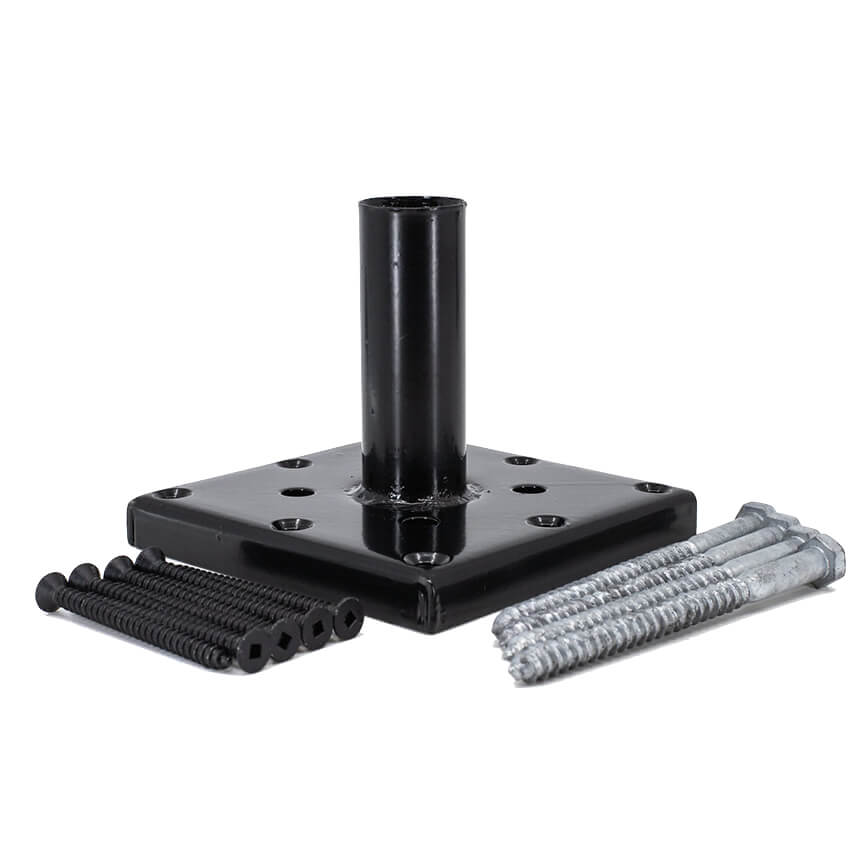
Install wood posts with strength, stability, and a clean finished appearance using the Titan Wood Post Anchor Kit.
Designed for decks, fences, pergolas, railings, privacy screens, and outdoor structures, the Titan Wood Post Anchor allows wood posts to be surface-mounted without bulky wraparound brackets or complicated carpentry.
By keeping the post elevated above the surface, Titan helps reduce direct moisture exposure at the post base while creating a cleaner, more professional look.
Description
Better Looking Than Traditional Post Brackets
Traditional post brackets can look bulky and unfinished. Titan Wood Post Anchors are designed to hide much of the connection inside the wood post for a lower-profile appearance.
Benefits include:
Clean, professional finished look
No large wraparound brackets
No notching deck boards
Works on wood, composite, and concrete surfaces
Helps keep posts higher and drier
Suitable for new builds and renovations
Compatible with Titan Metal Post Skirts for a finished base
How the Titan Wood Post Anchor Works
The Titan system uses a rigid internal tube that is driven into the core of the wood post. This creates a strong mechanical connection between the post and anchor while keeping the hardware appearance clean.
Basic installation steps:
Drill the center hole in the bottom of the post.
Drive the anchor tube into the post.
Fasten the anchor to the post using the included hardware.
Secure the anchor to the mounting surface.
Hole saw sizes:
4x4 and 4x6 anchors: use a 1-1/4” hole saw
6x6 and 8x8 anchors: use a 1-3/4” hole saw
For faster installation, use the Titan Universal Hammer Tool.
Mounting Surface Compatibility
Titan Wood Post Anchors can be installed on properly prepared:
Wood decking
Composite decking
Synthetic decking
Hardwood decking
Concrete
Masonry surfaces
For wood and composite decks, proper blocking below the deck surface is required. For concrete or masonry, use approved concrete screws and follow Titan installation instructions.
Titan Wood Post Anchors are intended for residential applications and must be installed according to Titan instructions, engineering reports, and local building code requirements.
For deck railings, guardrails, elevated surfaces, or structural applications, always confirm height limits, loading requirements, and local building authority approval before installation.
Optional Titan Post Braces are available separately when additional strength is required.
For the cleanest finished appearance, pair Titan Wood Post Anchors with Titan Metal Post Skirts to conceal the base hardware and create a polished look.
For longer wood post life, consider pairing above-ground anchoring with Fence Armor® RotGuard™ and PostGuard™ protection where appropriate.
FAQ
What is the Titan Wood Post Anchor used for?
The Titan Wood Post Anchor is used to surface-mount wood posts for decks, fences, pergolas, railings, privacy screens, mailbox posts, and other outdoor structures.
Can Titan Wood Post Anchors be installed on concrete?
Yes. Titan Wood Post Anchors can be installed on concrete or masonry using approved concrete screws and Titan’s installation instructions.
What size hole saw do I need?
Use a 1-1/4” hole saw for 4x4 and 4x6 anchors. Use a 1-3/4” hole saw for 6x6 and 8x8 anchors.
Do Titan Wood Post Anchors help keep posts drier?
Yes. Surface mounting helps keep the wood post elevated above the surface, reducing direct moisture exposure at the post base.
Can I use Titan Wood Post Anchors for deck railings?
Titan Wood Post Anchors may be used for some residential railing applications, but height limits, engineering reports, and local building codes must be reviewed before installation.
A Cleaner, Stronger Way to Surface-Mount Wood Posts
Install wood posts with strength, stability, and a clean finished appearance using the Titan Wood Post Anchor Kit.
Designed for decks, fences, pergolas, railings, privacy screens, and outdoor structures, the Titan Wood Post Anchor allows wood posts to be surface-mounted without bulky wraparound brackets or complicated carpentry.
By keeping the post elevated above the surface, Titan helps reduce direct moisture exposure at the post base while creating a cleaner, more professional look.
Description
Better Looking Than Traditional Post Brackets
Traditional post brackets can look bulky and unfinished. Titan Wood Post Anchors are designed to hide much of the connection inside the wood post for a lower-profile appearance.
Benefits include:
Clean, professional finished look
No large wraparound brackets
No notching deck boards
Works on wood, composite, and concrete surfaces
Helps keep posts higher and drier
Suitable for new builds and renovations
Compatible with Titan Metal Post Skirts for a finished base
How the Titan Wood Post Anchor Works
The Titan system uses a rigid internal tube that is driven into the core of the wood post. This creates a strong mechanical connection between the post and anchor while keeping the hardware appearance clean.
Basic installation steps:
Drill the center hole in the bottom of the post.
Drive the anchor tube into the post.
Fasten the anchor to the post using the included hardware.
Secure the anchor to the mounting surface.
Hole saw sizes:
4x4 and 4x6 anchors: use a 1-1/4” hole saw
6x6 and 8x8 anchors: use a 1-3/4” hole saw
For faster installation, use the Titan Universal Hammer Tool.
Mounting Surface Compatibility
Titan Wood Post Anchors can be installed on properly prepared:
Wood decking
Composite decking
Synthetic decking
Hardwood decking
Concrete
Masonry surfaces
For wood and composite decks, proper blocking below the deck surface is required. For concrete or masonry, use approved concrete screws and follow Titan installation instructions.
Titan Wood Post Anchors are intended for residential applications and must be installed according to Titan instructions, engineering reports, and local building code requirements.
For deck railings, guardrails, elevated surfaces, or structural applications, always confirm height limits, loading requirements, and local building authority approval before installation.
Optional Titan Post Braces are available separately when additional strength is required.
For the cleanest finished appearance, pair Titan Wood Post Anchors with Titan Metal Post Skirts to conceal the base hardware and create a polished look.
For longer wood post life, consider pairing above-ground anchoring with Fence Armor® RotGuard™ and PostGuard™ protection where appropriate.
FAQ
What is the Titan Wood Post Anchor used for?
The Titan Wood Post Anchor is used to surface-mount wood posts for decks, fences, pergolas, railings, privacy screens, mailbox posts, and other outdoor structures.
Can Titan Wood Post Anchors be installed on concrete?
Yes. Titan Wood Post Anchors can be installed on concrete or masonry using approved concrete screws and Titan’s installation instructions.
What size hole saw do I need?
Use a 1-1/4” hole saw for 4x4 and 4x6 anchors. Use a 1-3/4” hole saw for 6x6 and 8x8 anchors.
Do Titan Wood Post Anchors help keep posts drier?
Yes. Surface mounting helps keep the wood post elevated above the surface, reducing direct moisture exposure at the post base.
Can I use Titan Wood Post Anchors for deck railings?
Titan Wood Post Anchors may be used for some residential railing applications, but height limits, engineering reports, and local building codes must be reviewed before installation.